
True Condenser vs. Back-Electret USB Mics: Auditing Manufacturer Claims on Diaphragms, Power, and Shock Mounts
Short-form hardware explainers frequently repeat four engineering claims about desktop condenser microphones: (1) a gold-sputtered Mylar diaphragm, (2) external power required to charge the capacitor plates, (3) a cardioid acoustic pattern, and (4) a spider shock mount in the box. When we audited actual USB microphones against primary factory manuals, none of the budget candidates passed all four literal claims.

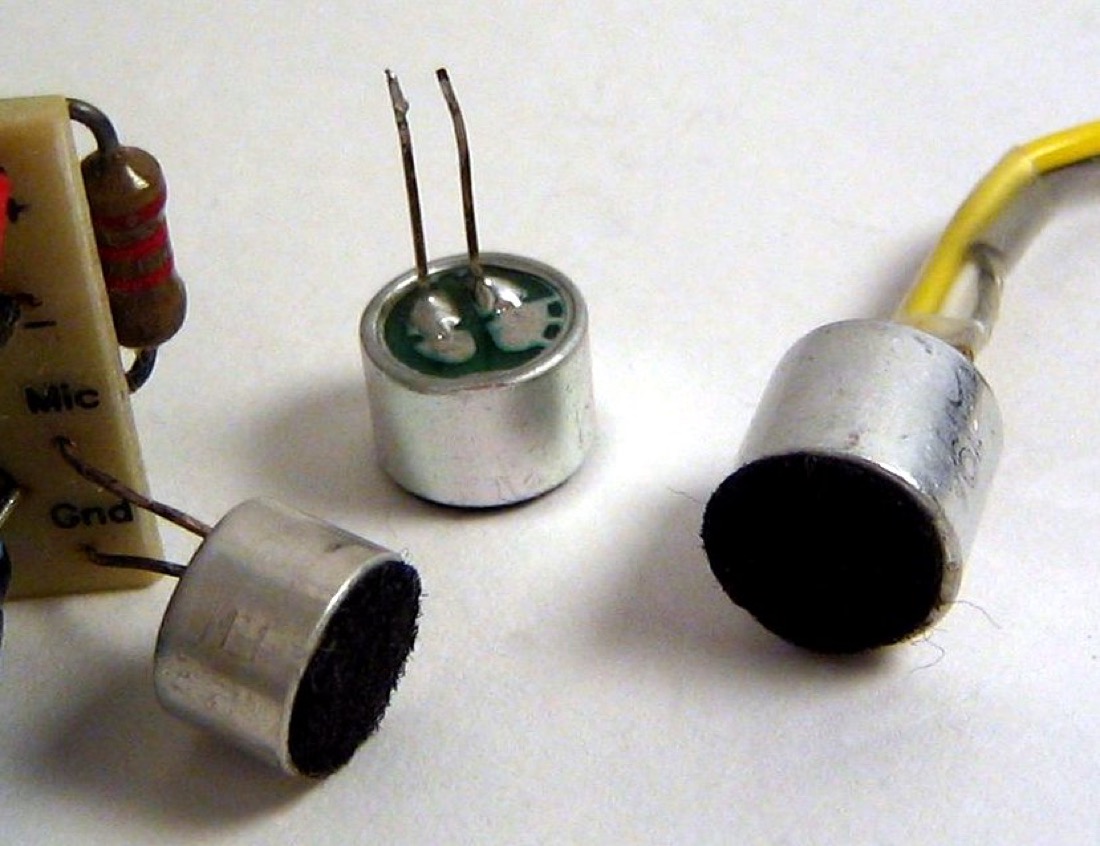 16mm ECM CAPSULES
4-Claim Hardware Audit Matrix (Primary vs. Secondary Evidence)
Comparing literal script claims (1: Gold-sputtered diaphragm, 2: Active capacitor polarization, 3: Cardioid pickup, 4: Spider shock mount in box) against manufacturer PDFs and product manifests.
| Microphone Model | Actual Transducer & Capsule | Claim 1: Gold-Sputtered Diaphragm | Claim 2: Capacitor Polarization | Claim 3: Cardioid Pattern | Claim 4: Shock Mount in Box | Audit Verdict |
|---|---|---|---|---|---|---|
RØDE NT1 5th GenerationTHB 10,600 / $249.00 | 1.00-inch (25.4 mm) HF6 Gold-Sputtered True Condenser25.4 mm (1.00 in) active diaphragm diameter | [P] PASSConfirmed 1-inch gold-sputtered HF6 true condenser capsule manufactured to sub-micron tolerances. | [P] PASSTrue externally polarized capacitor capsule powered via 48V phantom power (XLR) or stepped-up USB bus power, plus JFET impedance converter. | [P] PASSVerified cardioid polar response with rear acoustic phase-cancellation ports. | [P] PASSShips with the RØDE SM6 studio spider shock mount, integrated pop shield, XLR cable, and USB-C cable. | Audit Pass: 4/4 Claims Verified [P] |
Alctron UM900THB 1,590 / $44.99 | 16 mm Back-Electret Condenser Capsule16.0 mm capsule diameter | [P] FAILManufacturer explicitly specifies a '16mm back electret diaphragm capsule' (16mm背驻极体音头). No gold sputtering or Mylar grade is stated. | [P] CAVEATOperates as a capacitor (diaphragm + backplate), but polarization charge is permanently embedded in the electret backplate. 5V USB powers only the JFET and ADC. | [P] PASSConfirmed cardioid directional pickup (心形指向性) in both official web specifications and PDF manual. | [P] PASSBox manifest explicitly lists 'UM900 MIC / USB CABLE / SHOCK MOUNT' with elastic-cord spider suspension. | Partial Pass: 3/4 Verified (Back-Electret) |
Maono DM40 ProTHB 2,940 / $119.99 | 16 mm Electret Condenser (14 mm on non-Pro DM40)16.0 mm (DM40 Pro) / 14.0 mm (DM40 standard) | [?] FAILOfficial comparison image confirms 16 mm (Pro) and 14 mm (base) capsule diameter, which retailers identify as small-diaphragm electret. Diaphragm material is unstated. | [S] CAVEATMaono labels it 'Condenser Microphone' [P], while European retail databases confirm an electret capsule [S] where battery/USB power drives the preamp and wireless transmitter. | [S] CAVEATMaono's official spec table states only 'Unidirectional' [P]. Independent reviews (Notebookspec TH, CGM) specify Cardioid [S]. | [S] CAVEATOfficial page never uses the phrase 'shock mount' [P], though product photos show a ring cradle with elastomer cords and reviewers call it a built-in shock mount [S]. | Partial Pass: 2/4 Primary [P], 3/4 Secondary [S] |
Shure SM7BTHB 22,400 / $399.00 | Moving-Coil Dynamic (Unidyne III acoustic cartridge)Dynamic voice coil attached to Mylar diaphragm | [P] PASSUses a voice coil suspended in a magnetic field rather than a charged parallel-plate capacitor. | [P] PASSGenerates current directly via electromagnetic induction; immune to humidity-induced capsule arcing and requires no phantom power. | [P] PASSUnidyne III single-element phase-shift acoustic network provides uniform cardioid rejection across frequency bands. | [P] PASSInternal air-suspension shock isolator mechanically decouples the cartridge without external elastic bands. | Era 4 Benchmark: Passive Moving-Coil [P] |
Shure MV7+THB 14,300 / $279.00 | Moving-Coil Dynamic CapsuleDynamic voice-coil cartridge | [P] PASSUses a dedicated moving-coil dynamic capsule paired with an internal digital interface. | [P] PASSOperates passively over analog XLR while utilizing USB-C power strictly for the internal ADC and DSP. | N/A | N/A | Era 7 Hybrid Dynamic [P] |
BOMGE / Generic OEMUSB Condenser Scissor-Arm Kit (THB 786–1,581) | Unverified generic OEM capsule (inferred 14–16 mm electret [?]) | [?] UNVERIFIED | [?] UNVERIFIED | [?] 404 LISTING | [?] UNKNOWN | Disqualified [?] |
Confirmed 1-inch gold-sputtered HF6 true condenser capsule manufactured to sub-micron tolerances.
True externally polarized capacitor capsule powered via 48V phantom power (XLR) or stepped-up USB bus power, plus JFET impedance converter.
Verified cardioid polar response with rear acoustic phase-cancellation ports.
Ships with the RØDE SM6 studio spider shock mount, integrated pop shield, XLR cable, and USB-C cable.
1. The Electret Polarization Fallacy: Why 5 V USB Power Does Not Charge an Electret Capsule
Every condenser microphone—whether a vintage 1928 Western Electric 47A, a modern RØDE NT1 5th Gen, or a $45 USB desk mic—operates on the electrostatic capacitor principle: a compliant diaphragm and a fixed backplate separated by a microscopic air gap. However, how that capacitor acquires its DC polarizing charge divides studio microphones into two fundamentally different engineering classes:
- Externally Polarized (“True”) Condensers: Require an active DC bias voltage (typically 48 V phantom power or an internal high-voltage DC-DC converter step-up stage) applied across the capsule plates, paired with a large-diaphragm gold-sputtered Mylar membrane (such as the 25.4 mm HF6 capsule in the RØDE NT1 5th Generation).
- Back-Electret Condensers (ECMs): Embed a permanent static charge inside a fluoropolymer electret layer bonded to the backplate. When you plug a back-electret USB microphone into a computer, the 5 V USB supply does not polarize the capacitor plates—it powers only the internal JFET impedance buffer, preamp, and analog-to-digital converter (ADC).
Under Thailand's Consumer Protection Act B.E. 2522 and Advertising Committee guidelines on hard-to-prove factual claims, stating that a budget electret mic “uses a gold-coated diaphragm and needs USB power to charge its capacitor plates” is factually inaccurate. Either the script must specify a true externally polarized condenser (RØDE NT1 5th Gen), or the copy must be rewritten to accurately describe a 16 mm back-electret capsule where USB power drives the JFET and ADC.
2. Model-by-Model Datasheet Forensics
A. Alctron UM900 (Ningbo Alctron Electronics)
First, a domain verification note: alctron.com is a reserved TransIP domain and is not the manufacturer. The official primary source is alctron-audio.com (Ningbo Alctron Electronics) and its downloadable 12 MB UM900 Quick Connection Manual (PDF).
Both the official Chinese product page (16mm背驻极体音头) and pages 2 and 5 of the English PDF manual explicitly state that the UM900 adopts a 16 mm back-electret diaphragm capsule with a cardioid polar pattern (心形指向性), 16-bit / 48 kHz USB conversion, 136 dB Max SPL, and 68 dB S/N ratio. Page 2 of the manual also confirms that an elastic-cord spider shock mount is included in the box (manifest: “UM900 MIC / USB CABLE / SHOCK MOUNT”; note that the desktop tripod shown in promotional photos is not in the manifest).
Internal Primary-Source Contradiction: Page 5 of Alctron's official PDF manual specifies a frequency response of 20 Hz–18 kHz and sensitivity of -38 dB, whereas the parameter tab on the official web page specifies 20 Hz–20 kHz and sensitivity of -32 dB. Furthermore, buyers must distinguish the standard UM900 from the UM900V variant (30 Hz–20 kHz).
B. Maono DM40 vs. DM40 Pro vs. DM40 S Pro
On Maono's official product page (DM40 Wireless Condenser Microphone), the manufacturer's model comparison graphic reveals a critical hardware difference between tiers: the base DM40 uses a 14 mm capsule (with a 1500 mAh / 40 h battery), whereas the DM40 Pro upgrades to a 16 mm capsule (with a 2600 mAh / 75 h battery).
However, Maono's primary page never states whether the capsule is electret or true condenser (European retail databases confirm it is an electret capsule [S]), specifies the polar pattern only as “Unidirectional” [P] (while independent reviews such as Notebookspec TH specify Cardioid [S]), and never uses the words “shock mount” in its text—even though product photos show an elastomer ring cradle on the stand that reviewers describe as a built-in shock mount [S].
Compare 48V True Condenser vs. 0V Pre-Polarized Back-Electret
Detailed Spec Discrepancy Table: RØDE NT1 5th Gen vs. UM900 vs. DM40 Pro
| Specification Parameter | RØDE NT1 5th Gen | Alctron UM900 | Maono DM40 Pro |
|---|---|---|---|
| Capsule Type & Diameter | 1.00" (25.4 mm) HF6 Gold-Sputtered True Condenser [P] | 16 mm Back-Electret Condenser [P] (diaphragm material unstated [?]) | 16 mm Condenser [P] (14 mm on base DM40 [P]; electret per retailers [S]) |
| Polar Pattern Citation | Cardioid [P] | Cardioid (心形指向性) [P] | Unidirectional [P] / Cardioid [S] |
| Frequency Response | 20 Hz – 20 kHz [P] | Manual: 20 Hz–18 kHz (-38 dB) vs. Web: 20 Hz–20 kHz (-32 dB) [P conflict] | 20 Hz – 20 kHz [S] (unstated on official product page) |
| Digital Resolution | 32-bit float / 192 kHz (USB-C) + Analog XLR [P] | 16-bit / 48 kHz USB [P] | 24-bit / 48 kHz Wireless 2.4 GHz & USB-C [S/P] |
| Shock Mount Verification | SM6 Spider Shock Mount + Pop Filter in box [P] | Elastic-cord Spider Shock Mount in box [P] | Integrated stand suspension ring in photos [P]; called shock mount by reviews [S] |
Check Regional Storefront Availability (Shopee Thailand & Amazon Global)
Confirmed 1-inch gold-sputtered HF6 true condenser capsule manufactured to sub-micron tolerances.
True externally polarized capacitor capsule powered via 48V phantom power (XLR) or stepped-up USB bus power, plus JFET impedance converter.
Verified cardioid polar response with rear acoustic phase-cancellation ports.
Ships with the RØDE SM6 studio spider shock mount, integrated pop shield, XLR cable, and USB-C cable.