
150 Years of Microphone Engineering: Every Transducer Flaw and How Physics Fixed It (1876–2026)
Between Alexander Graham Bell's patent filing on February 14, 1876 and modern 32-bit float studio transducers in 2026 lies 150 years of electroacoustic engineering. Yet popular audio timelines routinely compress this history into a false linear chain—claiming each transducer directly fixed and replaced the one before it. We audited every era against original US patents and Bell System Technical Journal papers.
Interactive Transducer Lineage Explorer (1876–2026)
Inspect each transducer era individually or compare all 7 mechanisms in the complete patent audit table.
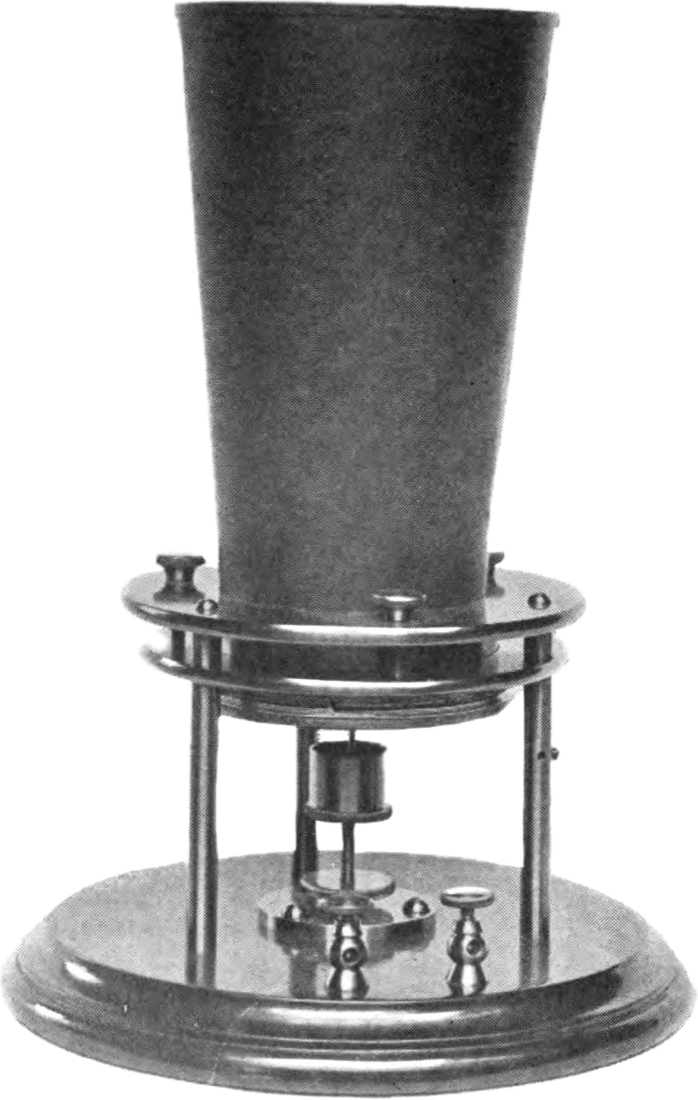
A platinum needle attached to a stretched parchment diaphragm dips into water acidified with dilute sulfuric acid (the patent text broadly states 'mercury or some other liquid'). Acoustic waves modulate immersion depth, varying liquid contact resistance in proportion to vocal pressure.
Mechanically unstable and chemically hazardous: the acidified water evaporated, corroded contacts, spilled if tilted, and required continuous micrometer adjustment. Bell never shipped the liquid transmitter in commercial telephones.
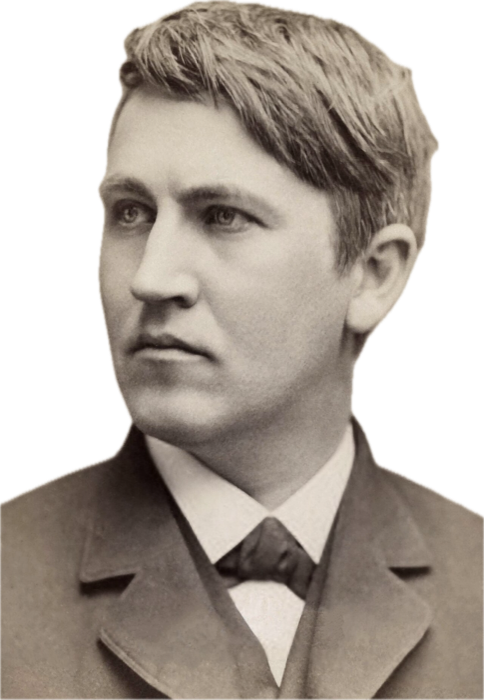
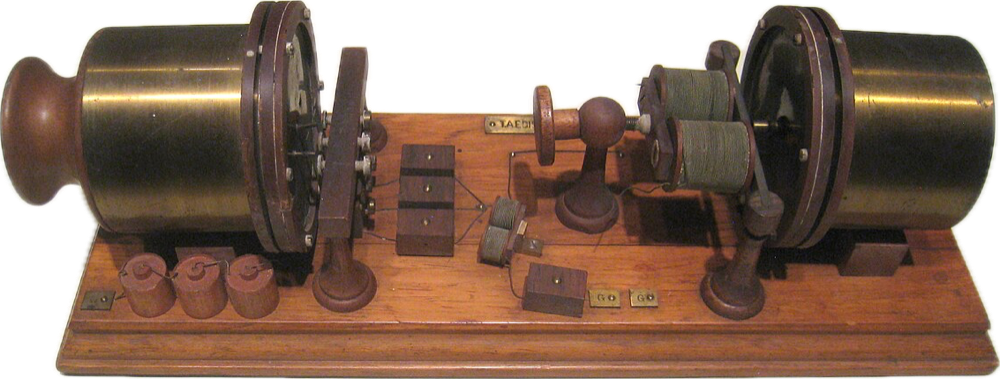
Commercial 1877 Bell telephones switched to a passive magneto transmitter (which was reliable but acoustically faint), prompting Western Union to commission Thomas Edison to engineer a high-output dry variable-resistance element: the carbon button.
1. 1876–1878: Liquid Acid Water, the Missing Magneto Step, and Edison's 40% Carbon Yield
Alexander Graham Bell filed US Patent 174,465 on February 14, 1876 (granted March 7, 1876)—the exact same day Elisha Gray filed his caveat for a liquid variable-resistance transmitter. Because Bell drafted the patent specification prior to his famous March 10, 1876 laboratory transmission, the patent text refers broadly to “mercury or some other liquid.” Primary testimony preserved in The Telephone Cases, 126 U.S. 1 (1888) confirms that the apparatus that actually spoke on March 10, 1876 dipped a platinum wire attached to a diaphragm into water acidified with dilute sulfuric acid.
While the liquid transmitter proved variable-resistance telephony worked, acid water evaporated, corroded electrodes, and spilled. Bell never shipped it in commercial telephones. Instead, the commercial telephones sold in 1877 used a passive magneto transmitter—which required no acid, but produced an extremely weak signal. That acoustic bottleneck prompted Western Union to hire Thomas Edison to build a louder transmitter, yielding the compressed lampblack carbon button (US 474,230 filed April 27, 1877; US 203,016 granted April 30, 1878), alongside David Edward Hughes's May 1878 Royal Society demonstration.
Carbon granules solved signal volume without requiring an active amplifier, but introduced persistent contact hiss, narrow voiceband coloration, and severe manufacturing variance: an 1878 archival letter in the Thomas A. Edison Papers at Rutgers (D7838ZEW) documents that only about 40 out of every 100 carbon buttons manufactured were usable.
2. 1916–1931: The 200 V Western Electric Condenser and the Moving-Coil Dynamic Tradeoff
To eliminate loose carbon granules for laboratory measurement and studio recording, Western Electric physicist Edward C. Wente filed US Patent 1,333,744 on December 20, 1916 (granted March 16, 1920). By stretching a thin metallic diaphragm parallel to a rigid backplate across a microscopic air gap, acoustic pressure smoothly modulated capacitance without granular contact noise.
Audit Correction on “1916 / 200V / Huge Capsule”: Wente's 1916 patent does not specify a 200 V polarizing voltage, and the capsule itself is not physically huge. The famous 200 V DC figure originates from the commercial Western Electric 47A (1928, which required a No. 239-A vacuum tube plus 200 V and 6 V DC supplies) and the Western Electric 640AA laboratory condenser. As verified in William H. Offenhauser's 16mm Sound Motion Pictures (printed p. 222, Fig. 45), the WE 640AA capsule measured just 1 inch in diameter by 1 inch long, operated at 200 volts DC polarizing potential (220 V DC maximum), and required a closely coupled vacuum-tube head amplifier (RA-1095) and external power supply box.
In 1931, Wente and A. L. Thuras introduced the Western Electric Model 618A moving-coil dynamic microphone. In their primary paper in the Bell System Technical Journal (Vol. 10, 1931, pp. 565–576), Wente and Thuras explicitly compared the moving-coil design against the condenser microphone: “no polarizing voltage is required” and “the amplifier may be at some distance from the microphone without loss in efficiency.” The physics tradeoff is moving mass: bonding a copper or aluminum voice coil to the diaphragm roughly doubles the transient rise time compared to a low-mass condenser membrane (as documented in Shure's Microphone Techniques for Music).
3. 1962–2026: Why Foil Electret, Silicon MEMS, and USB Hybrids Coexist
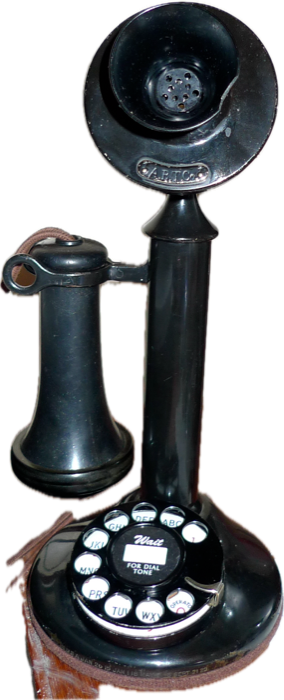
In 1962, Bell Laboratories scientists Gerhard Sessler and James E. West filed US Patent 3,118,022 for the foil-electret condenser microphone. By permanently trapping electrostatic charge in a polymer film, “all need for external bias is eliminated.” Crucially, the electret did not replace the stage dynamic microphone; it solved the condenser's 200 V power supply flaw while retaining low-mass transient detail, and went on to replace Edison's carbon transmitter in hundreds of millions of telephone handsets (US 5,946,392).
Yet polymer electret capsules (ECMs) had one fatal manufacturing bottleneck: their trapped charge decays under the 240°C–260°C heat of automated surface-mount reflow soldering (Elsevier MEMS Microphones, Ch. 8). Pioneered in silicon by Dietmar Hohm and Gerhard Sessler at TU Darmstadt in 1983 and commercialized by Knowles as the SiSonic in February 2003, silicon MEMS condenser packages (3.50 × 2.65 × 0.98 mm on the Knowles SPH0645LM4H-B—shorter than a 6.61–7.50 mm USDA long-grain rice kernel) survive reflow soldering intact, reaching 2.06 billion annual units by 2012.
Click Reticles [01]–[03] on Each Transducer Cutout
[01], [02], [03]) on the die-cut collage stage to compare Marketing Copy vs. Physical Reality.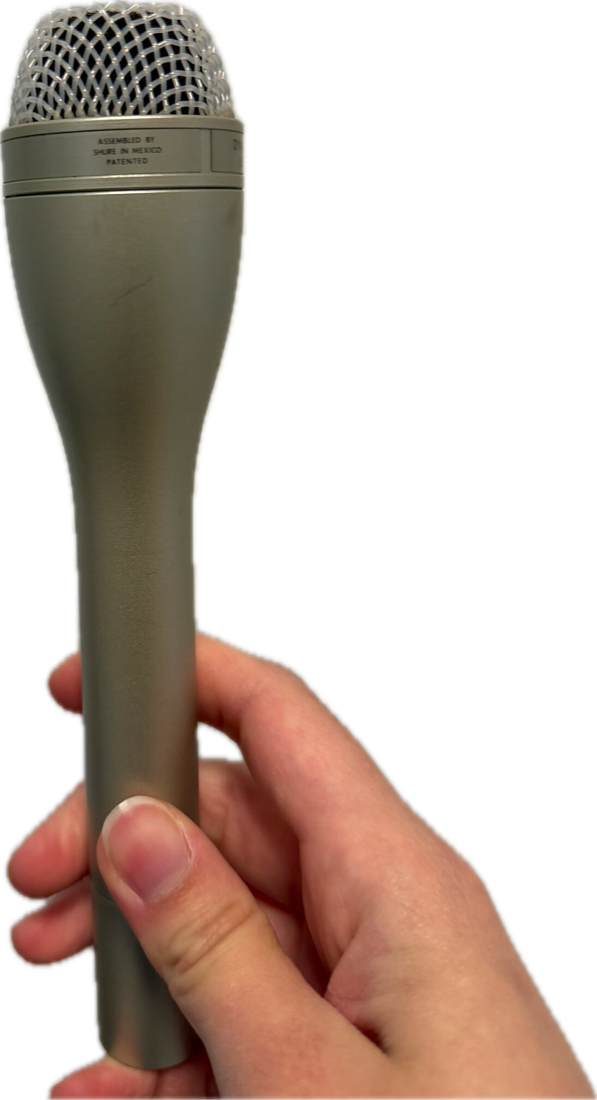
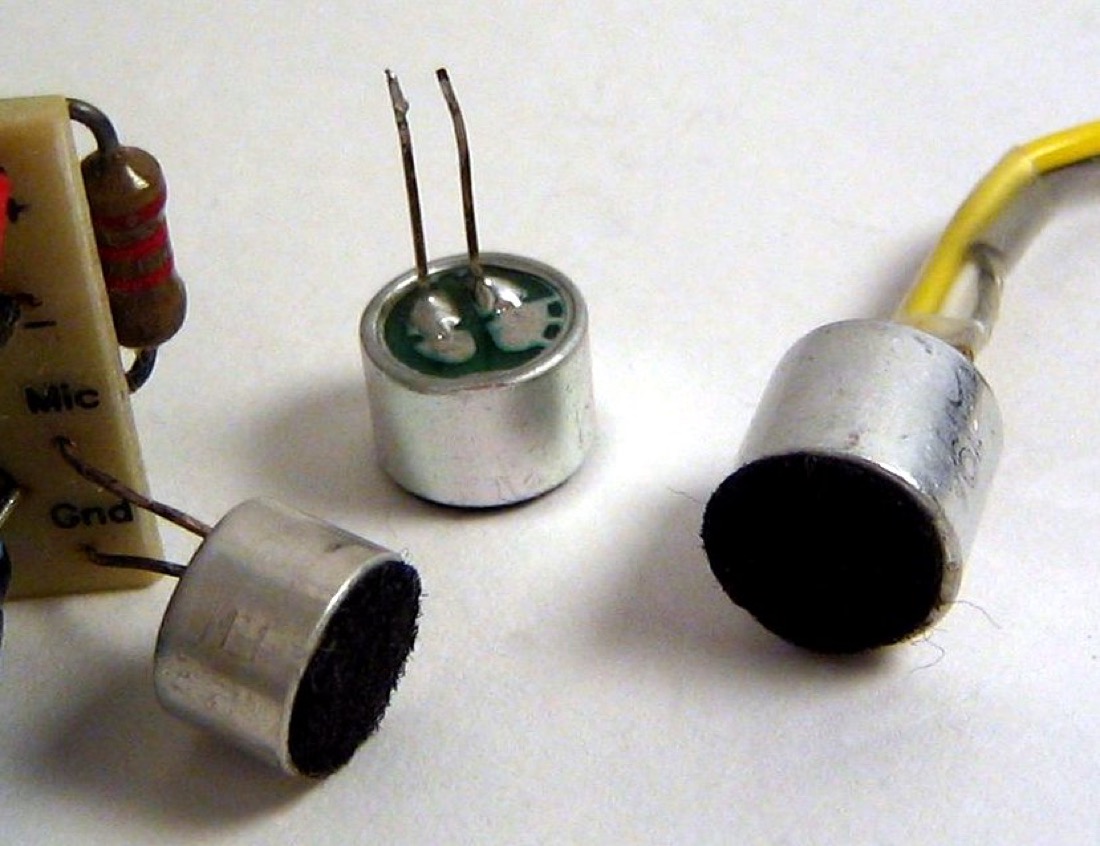 REF DIE / CAPSULE
Acoustic Capsule Head (25.4 mm Gold HF6 vs. 16 mm Electret)
"Studio condenser microphone with a large gold-sputtered Mylar diaphragm."
Only true studio condensers like the RØDE NT1 5th Gen house a 1.00-inch (25.4 mm) externally polarized gold-sputtered membrane [P]. Budget USB mics (Alctron UM900, Maono DM40 Pro) use a 16 mm pre-polarized electret capsule (14 mm on base DM40) [P].
Script & Technical Copy Audit Corrections Log
When translating 150 years of transducer physics into concise technical scripts, our primary source audit required the following precision corrections:
| Era / Scene | Original Draft Claim | Audited Engineering Wording | Primary Evidence Basis |
|---|---|---|---|
| Era 2: Carbon | Single year label (1877) | Use “1877–78” on-screen label | Edison filed US 474,230 in Apr 1877 and lampblack US 203,016 in Apr 1878; Hughes demonstrated in May 1878 [S5, S6, S8]. |
| Era 3: Condenser | “Flaw: it needs high voltage, and it's huge.” | “Flaw: 200 volts and its own power box.” | The WE 640AA capsule is 1" × 1"; the vacuum-tube head amp (RA-1095 / 239-A) and 200 V DC supply box are what made the system bulky [S14, S15]. |
| Era 5: Electret | “Fix: bake the charge in forever. No high voltage.” (implied fix to Dynamic) | “Fix: back to two plates, charge baked in. Detail returns, no high voltage. Cheap enough to replace carbon in billions of phones.” | Electret solves the condenser's external bias voltage (US 3,118,022) and replaced carbon in handsets (US 5,946,392), not moving-coil dynamics [S19, S22]. |
| Era 6: MEMS | “Then the whole mic shrank onto a silicon chip...” | “Then the condenser shrank onto a silicon chip, smaller than a grain of rice.” | MEMS is still an electrostatic condenser and uses two dies inside the package (MEMS acoustic membrane + CMOS ASIC) [S23, S28]. |
| Era 7: USB Hybrid | “...a clean capsule, a tiny chip, and a computer inside.” | “Today's mic stacks every fix: a clean capsule and a chip that turns your voice digital.” | Prevents confusing the USB ADC/DSP chip with a smartphone MEMS sensor [S29]. |
Modern Studio Benchmarks Across Condenser & Moving-Coil Lineages
Confirmed 1-inch gold-sputtered HF6 true condenser capsule manufactured to sub-micron tolerances.
True externally polarized capacitor capsule powered via 48V phantom power (XLR) or stepped-up USB bus power, plus JFET impedance converter.
Verified cardioid polar response with rear acoustic phase-cancellation ports.
Ships with the RØDE SM6 studio spider shock mount, integrated pop shield, XLR cable, and USB-C cable.
Primary Patents & Archival Bibliography [S1–S29]
- [S1] Bell, US Patent 174,465 (Filed Feb 14, 1876; Granted Mar 7, 1876)
- [S2/Open] The Telephone Cases, 126 U.S. 1 (1888) — Mar 10, 1876 dilute sulfuric acid water verification
- [S3] Science Museum Group, Replica of Bell's March 1876 Liquid Transmitter (co33314)
- [S5] Edison, US Patent 474,230 “Speaking-Telegraph” (Filed Apr 27, 1877)
- [S6] Edison, US Patent 203,016 Lampblack Carbon Button (Granted Apr 30, 1878)
- [S7] Thomas A. Edison Papers (Rutgers), 1878 Letter D7838ZEW (~40% carbon button yield)
- [S11] Bell Labs, The EL2 Electret Transmitter (1979)
- [S12] E. C. Wente, US Patent 1,333,744 Condenser Transmitter (Filed Dec 20, 1916; Granted Mar 16, 1920)
- [S14] Offenhauser, 16mm Sound Motion Pictures, p. 222, Fig. 45 (WE 640AA 200 V DC / 220 V max + RA-1095 tube amp)
- [S15] Coutant / ProSoundWeb, Western Electric 47A (1928, No. 239-A tube + 200 V DC supply)
- [S16/S17] Wente & Thuras, “Moving-Coil Telephone Receivers and Microphones,” BSTJ 10 (1931) pp. 565–576 (WE 618A)
- [S18] Shure, Microphone Techniques for Music (Condenser vs. Dynamic transient response)
- [S19] Sessler & West, US Patent 3,118,022 Electroacoustic Transducer (Filed May 22, 1962; Granted Jan 14, 1964)
- [S22] US Patent 5,946,392 (Electret handset replacing carbon transmitter)
- [S23] Acoustics Today, Spring 2009 (Sonion 2.6 × 1.6 × 0.87 mm MEMS history)
- [S24] Knowles SiSonic Launch (Feb 2003) & Neonode N1 Integration (May 2003 / 2004 release)
- [S25] Knowles SPH0645LM4H-B Datasheet (3.50 × 2.65 × 0.98 mm package dimensions)
- [S26] USDA ARS GRIN Descriptor 75005 (Long-grain rice kernel length: 6.61–7.50 mm)
- [S27] IHS / eeNews Europe (2012 MEMS microphone market: 2.06 billion units)
- [S28] Elsevier MEMS Microphones Ch. 8 (doi:10.1016/B978-0-08-100449-4.00008-7) & ETHW Gerhard Sessler (1983 TU Darmstadt)
- [S29] Sound On Sound, Samson C01U USB Condenser Review (2006)